RAGING BULL (1980)
Raging Bull is a biography of the fighter Jake La Motta directed by Martin Scorsese, who had directed two excellent films in the 70s, Mean Streets and Taxi Driver. The screenplay was adapted by Paul Schrader who also wrote the screenplay for Taxi Driver. Raging Bull contains a powerhouse performance by Robert DeNiro as the boxer whose sadomasochistic rage, sexual jealousy, and animalistic appetite destroyed his relationship with his wife and family. The film also features Joe Pesci as his well-intentioned brother, who tries to help him overcome his inner demons. Cathy Moriarty plays his beautiful, abused wife. Raging Bull is mostly shot in high contrast black and white, and the cinematography is incredibly powerful as it uses slow motion and freeze frames especially in the boxing sequences. The flash is used as a rhythmic devise in the flow of the images. Scorsese wanted the film to have the look of a Weegee photograph. There is one tranistional sequence in the middle of the film that is in color and has a Super8 home movie quality. Raging Bull is the story of the rise and fall of champion and his irrational self-destructive behavior. With this film Scorsese crafted a great work of cinematic art.

BERLIN ALEXANDERPLATZ (1980)
In 1985, each week I would make my way to the Thalia Theater on the Upper West Side of Manhattan and watch episodes of Berlin Alexanderplatz, that was originally made as a 14-part German television series by Rainer Werner Fassbinder in 1980. The film is based on the 1929 novel by Alfred Doblin. Gunter Lamprecht plays Franz Biberkopf, who is a criminal, fresh from prison, who is drawn into the underworld. The film is set in the working-class neighborhoods near the Alexanderplatz in 1920s Berlin. Fassbinder makes use of Doblin's use of montage, and uses songs and speeches and references to newspapers to propel the plot forward. The film also features Hanna Schygulla, Barbara Sukowa, and Gottfried John as the sinister Reinhold who won't allow Franz to put his life on the right track. By this time Fassbinder had become a master filmmaker and his theatrical influence seamlessly integrates into the cinematic story. Berlin Alexanderplatz is a story of deceit, betrayal, and murder and the first 13 chapters of the film stick to Doblin's story, and are done with great cinematic flourish. The final chapter, My Dream of the Dream of Franz Biberkopf by Alfred Doblin, An Epilogue, is a bizarre, surreal montage full of strange imagery that reimagines the relationships between the characters. This is Fassbinder's magnum opus. He would also make an excellent film in 1982 just before his death called Veronika Voss.

DIVA (1981)
Diva is directed by Jean-Jacques Beineix was one of the French films of the 80s to let go of the realist mood of the 70s and move to a more melodic and colorful style that became known as cinema du look. The story is centered around a young postman named Jules (Frederic Andrej) who is obsessed with a beautiful and celebrated opera singer (Wilhelmenia Fernandez) who has never consented to have her performances recorded. He attends one of her performances and secretly records it and steals one of her gowns. The plot also has Jules coming into possession of another tape that will expose police corruption. Jules becomes a hunted man and takes refuge at times with a mysterious bohemian (Richard Bohringer) and his young muse Alba who had befriended him. A relationship does develop between Jules and the opera singer, but the strength of Diva is its style and use of music. It is an audacious and original film and has a pop art quality that is inspired by the love of opera. Beineix would make another excellent film later in the 80s called Betty Blue.

BLADE RUNNER (1982)
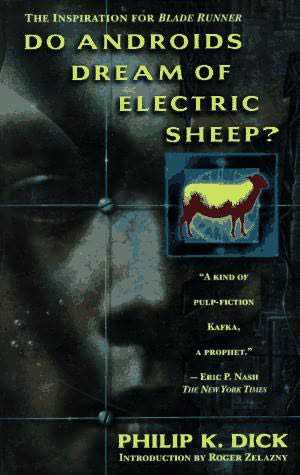
Blade Runner is a science fiction film directed by Ridley Scott and based on the novel, Do Androids Dream of Electric Sheep?, by Philip K. Dick. Harrison Ford plays a blade runner whose job is to hunt down and "retire" genetically engineered organic robots called replicants, who are visually indistinguishable from adult humans. The replicants or androids have been manufactured by various large corporations for the use of performing jobs on off-world colonies and are banned from living on Earth. The film focuses on a brutal and cunning group of recently escaped replicants who are hiding in LA. Rutger Hauer, Sean Young, and Daryl Hannah play three of these androids. Blade Runner has an amazing visual style that uses a dark film-noir look in conjunction with a futuristic vision of Los Angeles. It is a beautiful, thought-provoking, and moving film.

SOPHIE'S CHOICE (1982)
Sophie's Choice was directed by Alan Pakula and was based on the novel by William Styron. It tells the story of a Polish immigrant, Sophie, and her unstable lover Nathan, who share a boarding house with a young writer named Stingo in Brooklyn. The film contains a powerhouse performance by Meryl Streep as Sophie, that won her an Academy Award. Kevin Kline plays her troubled lover, and Peter MacNicol plays the young southern writer who comes to live with them and is the narrator of the film. The film uses flashbacks to tell of Sophie's tragic experiences during the war where she is made to make a choice by the Nazis that will effect and haunt her forever. Nathan goes through violent mood changes and over time and we come to understand that he is severely mentally ill. The story of these three characters becomes quite complex and it all leads to a powerful and tragic ending. Sophie's Choice is a beautiful and haunting film.

FANNY AND ALEXANDER (1983)
Fanny and Alexander is one of the later works of the great Swedish filmmaker Ingmar Bergman. The original version was created as a four-part television movie that spanned 312 minutes, although a shorter theatrical version was also released. The story is centered around a young boy and his sister and their family in Sweden in the early 1900s. After their father's death, the children go to live in the home of their new step-father who has married their mother. The step-father is a local bishop and puts the children under his stern and unforgiving rule. He tries to break Alexander by every means possible and after a time they live as virtual prisoners in the bishop's house. Eventually the family is freed by the intervention of their extended family. Alexander has fantasized about the bishop's death and when it does happen he wonders if somehow he magically brought it to fruition. Fanny and Alexander is full of beautiful moments and is told by a master with precision and clarity leading to a powerful and universal cinematic experience.

SCARFACE (1983)
Scarface was directed by Brian De Palma and written by Oliver Stone and stars Al Pacino as the criminal Tony Montana. The film is a remake of the 1932 original by the same name. It tells the story of Tony Montana, a Cuban refugee who comes to Miami in 1980 as a result of the Mariel Boatlift. Over time he ascends to the throne of a drug cartel during the cocaine boom of the 1980s in Miami. It is full of corruption, violence, and betrayal and makes a strong statement about the excess and decadence of the 80s. There is a powerful sequence where the Cuban refugees stage a riot in the encampment they are kept in under an interstate highway. The Goodyear blimp floats by Tony's vision - The World Is Yours, Take It - and so he does. Scarface is about achieving the American Dream as Tony becomes a successful capitalist, but one who succeeds by using intimidation and brute force to attain what he wants. Scarface uses an over-the-top style to reflect the excess and culture of greed and corruption that evolved in the 80s.

THE YEAR OF LIVING DANGEROUSLY (1983)
The Year of Living Dangerously was directed by Peter Weir and based on the novel of the same name by Christopher Koch. The story centers around the love affair between a journalist and an embassy worker during the overthrow of President Sukarno in Indonesia in 1965. Mel Gibson is Guy Hamilton, and Australian journalist, and Sigourney Weaver plays Jill Bryant, an officer of the British Embassy. The film depicts the close-knit members of the foreign correspondent community, which include the photographer Billy Kwan, who is a Chinese-Australian dwarf of high intelligence and moral seriousness. Billy Kwan is played by the actress Linda Hamilton with a convincing power, earning her an Academy Award for her role. Kwan takes a liking to Hamilton and helps him make contacts and find information for his stories. There is corruption depicted both within the journalist's community, and by the politics of Indonesia where Sukarno is unable to meet the needs of his people who mostly live in poverty. The door is open for a potential communist revolution. The climax of the film comes when Billy Kwan makes his statement about the way things are. It is shocking and powerful. The Year of Living Dangerously mixes a passionate romance with the complexity and sense of dread of a political thriller where there are no real answers to solve these issues.

STRANGER THAN PARADISE (1984)
Stranger Than Paradise was written and directed by Jim Jarmusch and features John Lurie, Richard Edson, and Eszter Balint. The film was groundbreaking for its unusual minimal style, as it was shot in black-and-white with a still photographer's eye for composition. It tells a simple story with an absurdist/deadpan comedic style of a young woman from Hungary visiting her hipster cousin in New York. She then goes to Cleveland, where her cousin and his friend go to visit her. The film is insightful with its depictions of cultural differences. It has a slow methodical pace, influenced in style by international art house films, and even refers to Ozu's Tokyo Story. Because of its low-budget aesthetics and use of - at the time - non-professional actors it had a huge impact on the Independent Cinema movement that would follow.

VAGABOND (1985)
Vagabond is a French drama directed by Agnes Varda featuring Sandrine Bonnaire. It tells the story of a young woman vagabond who wanders through the French wine country and how she comes to her demise. The film begins with her death as her contorted body is found covered in frost. An unseen and unheard interviewer puts the camera on the last characters to see her and the ones that found her. The film flashes back to Mona's journey, a road to nowhere, as she prefers to wander the country free from responsibility. We see her walking the roadside, hiding from the police, and trying to get a ride. She meets others along the way including a Tunisian vineyard worker, a family of goat farmers, a professor researching trees, and a maid who envies Mona as she perceives Mona's lifestyle to be full of passion. Surviving becomes more difficult over time as the winter sets in, until she meets her death. Vagabond mixes a straightforward narrative with documentary-like sequences with some significant events happening off-screen which causes the viewer to piece the information together themselves to gain a full picture. It makes a powerful statement about the mystery of existence, without manipulating the viewer, but by objectively showing the experiences of a woman who lived the life she wanted but led her to a tragic end.

BLUE VELVET (1986)
Blue Velvet was written and directed by David Lynch and uses both elements of film noir and surrealism in telling its bizarre tale of mystery. The film features Kyle MacLachlan, Laura Dern, Isabella Rossellini, and re-launched the career of Dennis Hopper with his role as the dark and sinister Frank Booth. MacLachlan plays Jeffrey Beaumont who when returning from seeing his ill father in the hospital comes across a human ear in a field in his hometown of Lumberton. He proceeds to investigate the ear with his girlfriend Sandy (Dern), who provides him with information as her father is a local police detective. This draws them into the town's seedy underworld where Jeffrey forms a strange sexual relationship with an alluring torch singer named Dorothy Vallens (Rossellini). She is being controlled and abused by the psychotic criminal Frank Booth, who engages in drug abuse, kidnapping, and sexual violence. Lynch uses a unique visual style where he contrasts the lights and the darks of the American experience, using unusual camera movements and strange sounds, and layers the visuals with seemingly odd, yet effective music. Blue Velvet depicts an America where on the surface it is white picket fences, love songs, and friendly people, but underneath there is a dark and sinister underbelly that can't be avoided.

HANNAH AND HER SISTERS (1986)
Hannah and Her Sisters was one of three excellent films made by Woody Allen in the 80s. The others were Stardust Memories (1980) and Crimes and Misdemeanors (1989). Hannah and Her Sisters tells the story of three Manhattan sisters played by Mia Farrow (Hannah), Barbara Hershey (Lee), and Diane Wiest (Holly). All of them are different personalities and dependent on one another in different ways, with Hannah being the oldest and most admired. Michael Caine is Hannah's husband but he is obsessed with Lee and is tired of Hannah's seemingly lack of need for anything. Lee lives with Frederick played by Max Von Sydow as an older artist who she is now tired of, yet she is racked with guilt about her affair with Caine. Von Sydow provides the film some of its most darkly funny sequences. Wiest steals the show as an incredibly funny Holly, who is a total mess trying to find herself. Woody appears as Hannah's ex-husband who is hilarious as a hypochondriac trying to find the meaning of life. There are other characters who have short but memorable scenes including Lloyd Nolan and Maureen O'Hara as the sister's parents, and Daniel Stern as a young music producer and art collector. Hannah and Her Sisters deals with serious issues but integrates hilarious comedic sequences seamlessly into the narrative.

THE LAST EMPEROR (1987)
The Last Emperor is another excellent film by Bernardo Bertolucci, following his great films of the 70s, The Conformist, Last Tango In Paris, and 1900. It tells the story of Puyi, the last Emperor of China from his ascent to the throne as a young boy to his imprisonment and political rehabilitation by the Chinese Communist authorities. The film features John Lone as Puyi, Joan Chen, and Peter O'Toole and it was the first feature film to be given the authorization by the Chinese government to film in the Forbidden City in Beijing. The film starts in 1950 with Puyi's re-entry into the People's Republic of China as a political prisoner and war criminal, having been captured by the Red Army in the Soviet Union after the end of WWII. The film then flashes back to the other periods of his life. The Last Emperor, like all of Bertolucci's film is full of amazing visuals as it is photographed by the great cinematographer Vittorio Storaro. The film shows the extremes of two political structures, one a Monarchy, and the other a Communist society where there is no place for an emperor. The Last Emperor is a beautiful and thought provoking film, that depicts the rise and fall of one man, who never asked for the position he was born into, but still leads him to a tragic end.

WINGS OF DESIRE (1987)
Wings of Desire, also known as The Sky Over Berlin, is a French-German co-production directed by Wim Wenders. The film is about invisible, immortal angels who populate Berlin and listen to the thoughts of the humans below and comfort those who are in distress. One of the angels, played by Bruno Ganz, falls in love with a beautiful, lonely trapeze artist. The angel chooses to become human so he can experience the human sensory pleasures, like tasting food, or touching a love one. The film is mostly shot in a black and white and7 is also a meditation of Berlin's past, present, and future. Peter Falk plays a filmmaker who has arrived in Berlin to make a work about Berlin's Nazi past. As the film evolves we find that he was once an angel, but tired of always observing, but never experiencing, and renounced his immortality to become a participant in the world. The film has a loose narrative quality and includes a sequence in a club where we see and hear Nick Cave and the Bad Seeds. Wings of Desire is a beautiful film that reaffirms that human existence with all of its problems is still worth living and that the unique sensory perceptions that we have are to be cherished.

DO THE RIGHT THING (1989)
Do The Right Thing was written and directed by Spike Lee and tells the story of a neighborhood's simmering racial tension, which comes to a head and culminates in tragedy on the hottest day of the year. The film features Lee, Danny Aiello, Ossie Davis, Ruby Dee, Joie Lee, Richard Edson, Giancarlo Esposito, Bill Nunn, John Turturro, Martin Lawrence, and Rosie Perez. Mookie played by Spike works at Sal's Famous which is owned by the Italian Aiello, even though it is located in Bed-Stuy a black neighborhood in Brooklyn. The film depicts several characters in the neighborhood who represent various aspects of life and allows the film to deal with issues of race, class, and gentrification. Spike Lee has a unique vision and uses a colorful palette and a strong use of music, including Fight The Power by Public Enemy, to create a film that is funky and dynamic, and mixes drama and comedy into a powerful portrait of an America where these issues are still being wrestled with in our society.